
$1 Million Braddock Endowment Keeps Student-Athlete Mentors in Play
Coaching at Embry-Riddle has never stopped at the edge of the court or been limited to those with the title. Long before it had a name, Eagle student-athletes were helping each other stay on track in the classroom and in competition. The Braddock Educational Success Team, or BEST program, didn’t invent that instinct. It recognized it, strengthened it and made it last.
It almost didn’t happen.
When basketball coach Steve Ridder spoke at a Rotary Club meeting about Embry-Riddle athletics, someone was listening. And after the talk, a question followed: given their discipline and focus, did student-athletes really need additional support?
Ridder didn’t hesitate. The students were capable, he said, but the demands were relentless. What they needed was support from people who understood the pressure and could help them navigate it.
With that conversation, BEST was born.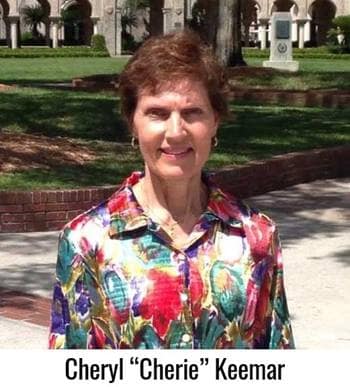
Cheryl “Cherie” Keemar, daughter of Robert and Lois Braddock, was there from the beginning, not as a bystander but as an architect. For years, she attended academic champion dinners honoring the team with the highest GPA, sitting with students and listening as they described how a tutor had carried them through a semester they weren’t sure they would survive. Ridder still remembers how she would light up when a student stood and said simply, “I’m not sure I would have made it without this program.”
In those early years, the work stayed close to the ground. Coaches and coordinators built the program student by student, pairing athletes with mentors who understood both the academic load and the pressures of competition.
“As the program coordinator during those early years, I saw that Cherie’s ‘why’ was always about the student and person behind the athlete,” says Dave Therneau, now head baseball coach. “Having watched this evolve over the last two decades, it’s incredible to see her vision come full circle. This gift doesn't just honor her legacy—it guarantees it for the next generation.”
For nearly two decades, Cherie has carried the work forward. Now, through the Cheryl L. Keemar Revocable Trust, she is making it permanent.
The gift includes $1 million to establish the Braddock Educational Success Team Endowment and $90,000 in current-use funding through the Cherie Keemar Trust Fund, sustaining tutoring, mentoring and scholarships in perpetuity while putting resources in students’ hands now.
“This gift is a vital bridge that sustains the mentoring and scholarships that have defined our culture for decades,” says Maria Lopez, head women’s golf coach and a former BEST coordinator. “It ensures our student-athletes continue to lead the way in the classroom and on the field while putting the resources they need in their hands right now.”
For more than 20 consecutive years, Embry-Riddle student-athletes have posted higher GPAs than the general student body. This gift ensures that record continues.
“The BEST Program embodies our commitment to developing the whole student-athlete,” says Rachel Burleson, director of athletics. “This gift represents more than a single moment of generosity; it reflects a long-standing partnership and belief in our mission.”
From Athletes to Mentors
Alma Olesen (’25) came to understand the program by needing it. She came to Embry-Riddle from Sweden to study business administration.
“For me, it was really challenging—new language, new location. Everything was completely new.”
She held steady, earning four straight years on the conference honor roll. Now in an MBA program and working within BEST, she helps run the system that once supported her.
“You can come into the center and get the help you need. That’s special.”
Four seasons on the pitch, and now a graduate assistant coaching role, gave her a view from the inside.
“We’re a resource for coaches now,” she says. “They reach out when an athlete needs help with a course. We can say, come this day. This tutor will be here. We get them connected.”
Meeting the donors behind the program sharpened that view for Olesen.
“They know athletes have a lot on their plates. They want to make this a better place to succeed, on the pitch but also in the classroom.”
The results do not always show up immediately.
“I’m excited to see where these athletes end up.”
The impact runs both ways.
“Being able to help, that’s motivating. It’s encouraging for all of us.”
For Leah Oberkehr (’26), a recent civil engineering graduate, the encouragement comes from connecting students with tutors. She focuses on matching students with the right support across subjects, schedules and seasons. She will begin a master’s program and serves as a BEST tutoring program coordinator.
“I look for variety, different sports, different seasons, so we always have people available,” she says. “And a range of expertise, trying to provide as many resources as we can.”
Most tutors do not need convincing.
“They’re already helping their teammates,” she says. “So, it’s, why not share that with more people if I can?”
“I’ve seen students come in after failing a test and come back with a B,” she says. “Not perfect, but a big improvement. And they understand the material in a way they didn’t before.”
That is the system at work, timely, specific, built student to student.
During a recent campus visit, Katherine Scribner, executive director of Braddock Philanthropies, got to see the program in action.
“When Cherie met Coach Ridder, something resonated for both of them. The power of that authentic connection still powers the program. She is so embraced by the community. Her dad was a football player of humble origins and attending the business college at University of Oregon changed his life. After he built a successful real estate business, he wanted to create a tutoring program for athletes. When Cherie discovered Embry-Riddle and its students, she recognized a place she could replicate her father's original idea.”